“Every work project we do is fundamentally a people project.”
For this edition of our Thought Leadership series, Kieron Broadhead, Deputy Vice-President (Operations) at the University of Southampton, sits down with BritCham Shanghai to explain how people have shaped his journey in higher education.
From launching a new university campus in India in a remarkably short time, to helping students build career-ready skills through initiatives such as Career Advantage China, he reflects on the importance of people, real-world experience and strong university-business partnerships in preparing the next generation for a changing world.
Every year, thousands of young people arrive at university believing it marks the beginning of a new chapter. But for Kieron Broadhead, Deputy Vice-President (Operations) at the University of Southampton, the real question is not what happens on the day students arrive; it is what happens after they leave.
Whenever Kieron Broadhead is asked about leadership, his answer begins with a question.
“Who am I working for? And what do they need?” He told the British Chamber of Commerce Shanghai during his visit to the Chamber’s Shanghai Office.
It is a question he has returned to throughout more than two decades in higher education, from his first role supporting international students to leading parts of the University of Southampton’s global operations today.
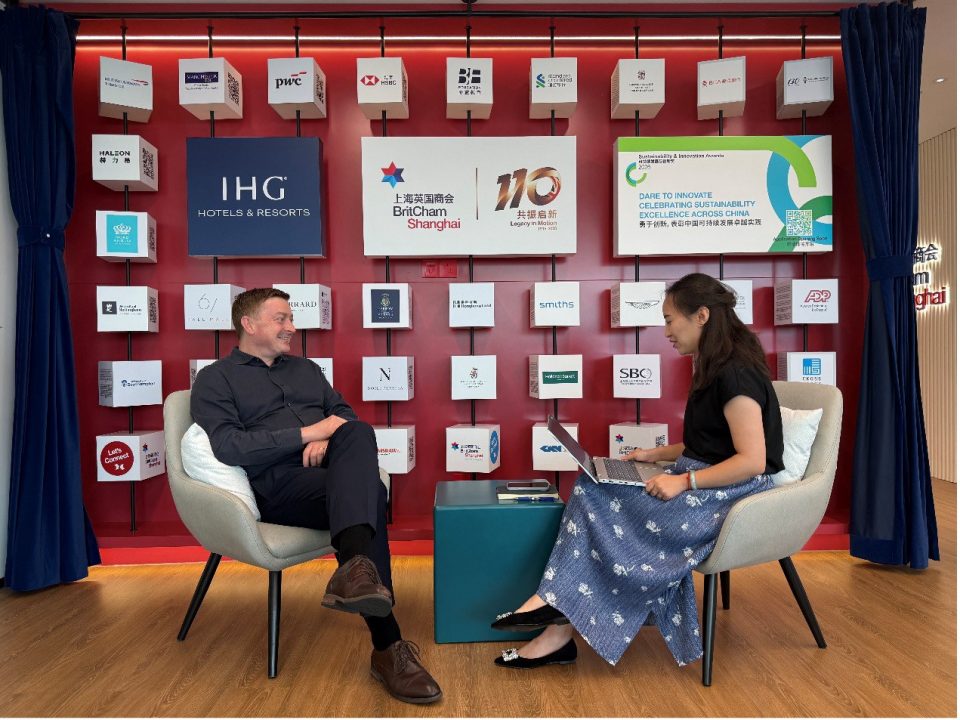
Kieron still remembers one of his earliest roles at the University of Hull, where he was tasked with improving the experience of international students. Universities were becoming increasingly global, yet many students still struggled to feel they truly belonged.
“We were recruiting thousands of international students, but we weren’t necessarily making them feel as welcome as we would have hoped,” he explains.
The experience taught him that higher education is, above all, about people. Every student arrives with different ambitions, challenges and expectations, and understanding those needs should shape every decision a university makes.
This philosophy was tested on an extraordinary scale in 2024 when the University of Southampton became the first UK university to receive approval by the Indian government to create a comprehensive branch campus in the country.
The timeline was daunting. From receiving regulatory approval to welcoming its first students, the University had just twelve months to transform an ambitious vision into a fully operational campus. Buildings needed to be completed, academic and professional services teams recruited, students admitted, and an entirely new operation established in one of the world’s fastest-growing higher education markets.
“It was incredibly intense,” Kieron says. “But also incredibly inspiring.”
What’s striking is that when he talks about it now, he barely mentions construction schedules or project timelines.
“Every work project we do is fundamentally a people project.”
It’s a lesson that’s stuck with him throughout his career: success rarely comes down to process. It comes down to the people running it.
“It’s about the people you’re trying to collaborate with, the people you’re trying to serve, and the talent you bring together to achieve the goal,” he says. “Being part of the team that opened a university in a year proved it was possible – but only because we brought together the right people with the right energy, values and vision.”
That belief still shapes how he leads at the University of Southampton today. Universities tend to get measured by rankings, research output, and graduate outcomes. Kieron thinks the real story starts somewhere else entirely.
“People are the engines of innovation, growth and change.”
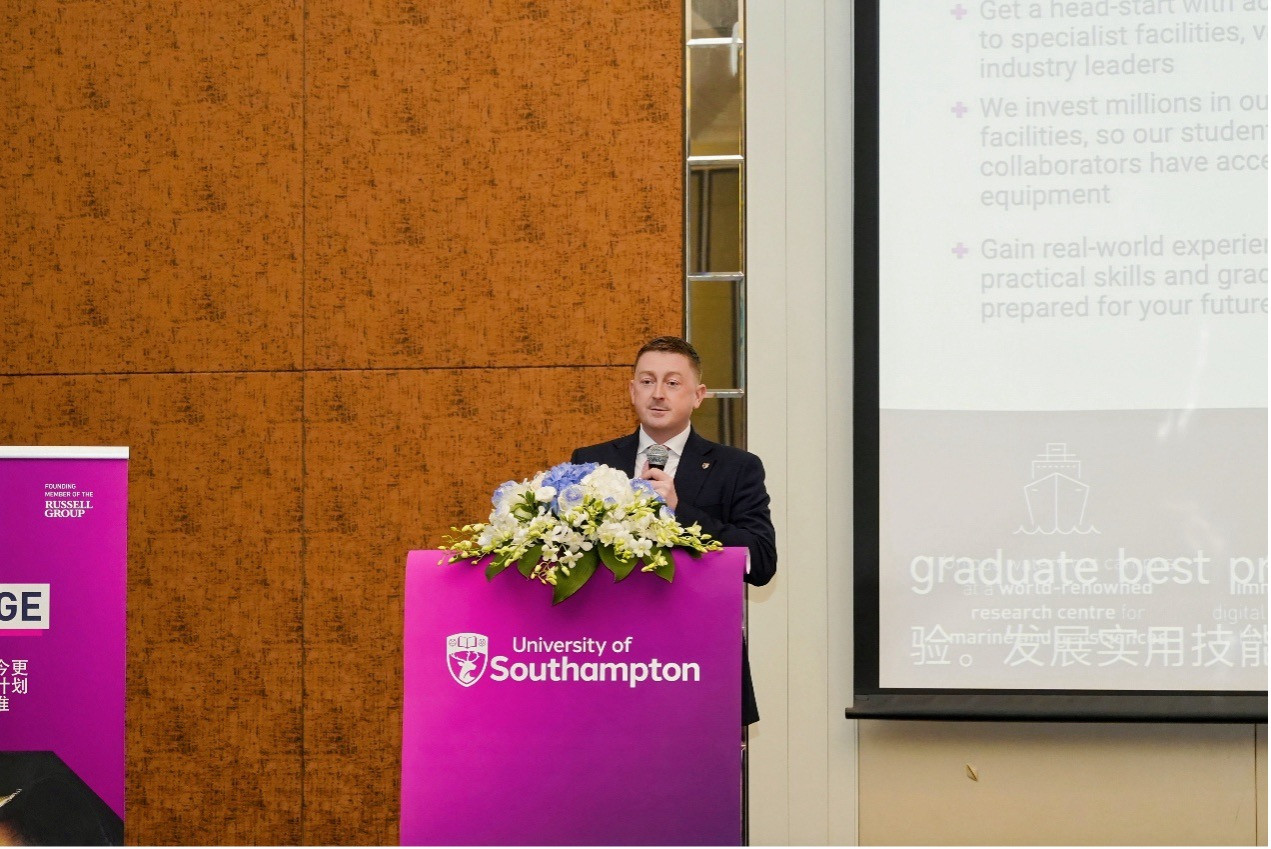
Kieron speaking at the University of Southampton China Open Day, Shanghai, March 2026.
Today’s students aren’t just adapting to change, Kieron points out – a lot of the time, they’re the ones driving it.
For him, helping students succeed was never about bolting on one more employability workshop or handing out careers advice in a student’s final semester. The problem runs deeper than that.
“We know from the data, hard data, that the strongest predictor of a student successfully gaining employment after graduation is their employment experience during their studies”, he says.
That single insight pushed the University of Southampton to rethink the entire student journey, especially for postgraduates, many of whom finish their degrees in a single year. Instead of treating employability as something that kicks in after graduation, the university has built it into the student experience from day one.
“If you reverse-engineer from the destination,” Kieron explains, “and think about the skills students need to secure a graduate role, you can start building those skills long before they enter the workplace.”

Kieron hosting the University of Southampton partner and alumni appreciation dinner in Shanghai, March 2026.
That thinking became Career Advantage China, an employability programme built specifically for Chinese students that runs alongside them before, during and after their studies. Rather than a handful of disconnected activities, it’s designed as one continuous journey, one that starts before students even set foot in the UK.
Official figures put the number of Chinese students enrolled on UK courses in 2024-25 at 143,200. Across 158 universities, Chinese students brought in roughly £5.5 billion in tuition fees in 2024, with about 10% of all university income from fees nationally. At the University of Southampton specifically, international students make up 40% of the student body.
The programme starts with pre-arrival career webinars to get students thinking about where they want to go, then builds practical skills through mentoring, networking, volunteering, work-based projects and internships. Alumni and industry professionals share their own career paths as Career Mentors, while recent graduates step in as Career Buddies, helping newer students navigate interviews, workplace norms and the shift into professional life.
“We believe that takes students on a complete journey,” Kieron says. “By the time they enter the workplace, they already know how to talk about their skills, demonstrate real experience and understand what employers are looking for.”
More than that, Career Advantage reflects how the University of Southampton now sees its own role.
“We’re not just preparing students academically,” he says. “We’re helping them understand the world they’ll be working in.”

The University of Southampton co‑leading its education partners on an ‘After Dark’ exploration tour focused on education and nature conservation at Nanjing Hongshan Forest Zoo, March 2026.
That’s why the University of Southampton invests so heavily in relationships with employers, alumni and organisations like BritCham Shanghai. Those partnerships don’t just create opportunities for students, they keep teaching and research grounded in the industries and communities they’re meant to serve.
“Networks are critical,” Kieron says. “If we understand what organisations are thinking about and the skills they’re looking for, we can better prepare our students.”
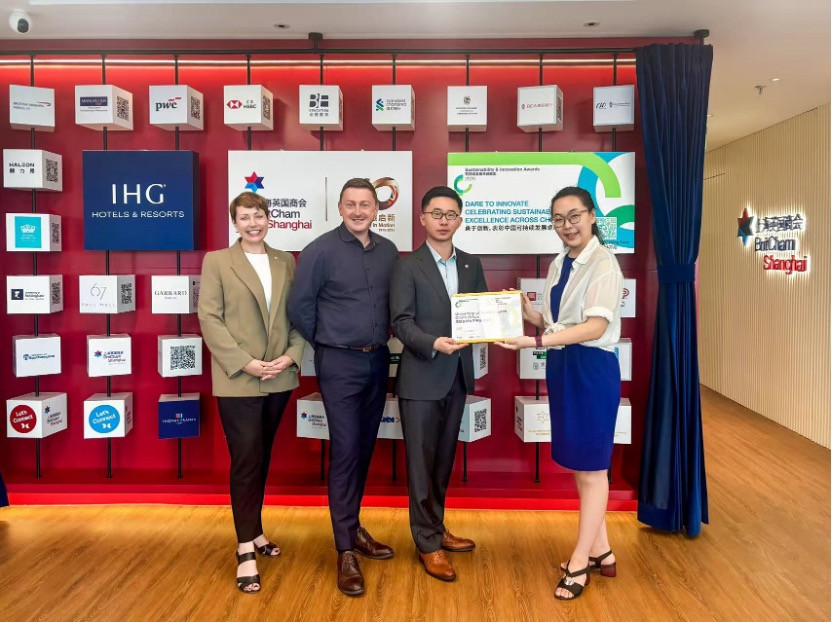
The University of Southampton China Office received a Finalist certificate for the Social Impact Award at the Sustainability & Innovation Awards 2026, pictured from left to right: Amanda Procter, Kieron Broadhead, Tiefu Zhao (University of Southampton delegation), and Janet Jiang, Deputy Executive Director of BritCham Shanghai.
The same thinking runs through how the university supports international students more broadly. For Kieron, these experiences are every bit as important as what happens in the lecture theatre.
“We want everyone to feel like they’re part of the community.”
Throughout the conversation, Kieron returns repeatedly to the same idea: universities are, above all, about people. Rankings matter. Research matters. International partnerships matter. But their purpose is ultimately the same, to help students realise their potential and equip them to thrive in a changing world.
It’s a view that lines up closely with BritCham Shanghai’s own mission of connecting business, education and government. As industries evolve and demand grows for globally minded talent, closer collaboration between universities and employers is only going to matter more.
BritCham Shanghai was delighted to welcome Kieron Broadhead for this conversation and looks forward to deepening its partnership with the University of Southampton, helping build stronger connections between higher education and the business community, and creating more opportunities for students, employers and future talent alike.
An interview series with industry leaders. Each edition will bring sharp insights, fresh perspectives, and stories that inspire.
如果您希望分享专业见解、行业观点或个人经历,并成为未来系列的受访嘉宾,欢迎联系 yuting.zhu@britishchambershanghai.cn 。我们很乐意与您探讨合作机会。